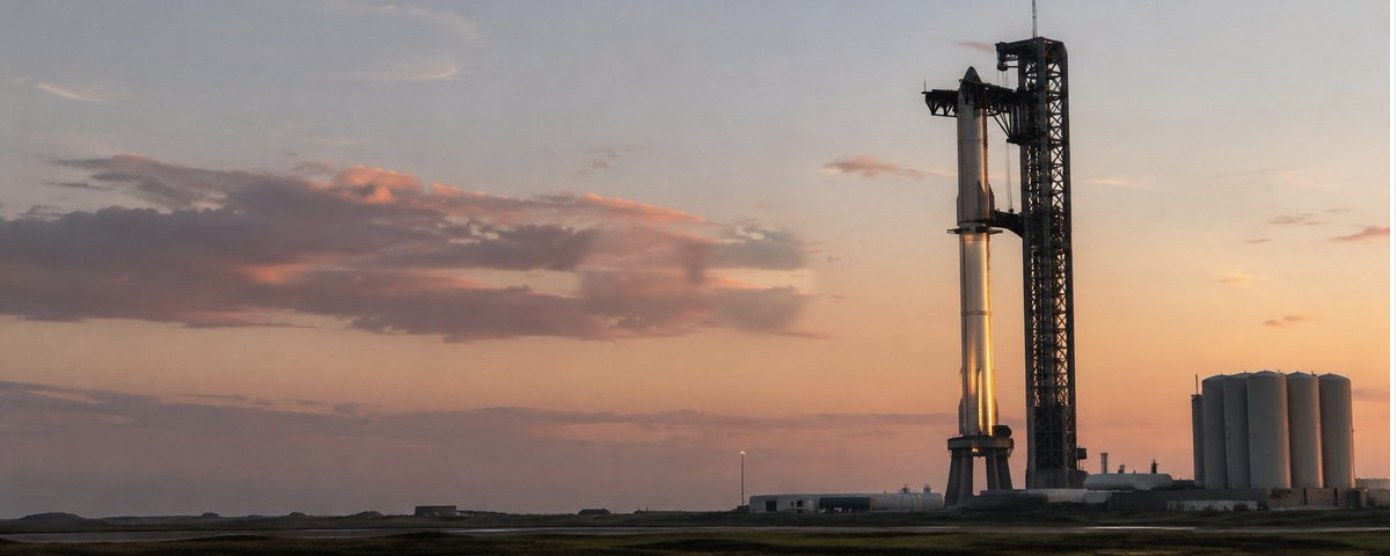
As a kid, I genuinely thought I'd be on Mars by now. I would watch videos about 'the world in 2030' or 'top 10 coolest inventions coming in the 2020s' imagining how what I saw would change my life. I explicitly remember seeing and dreaming about flying cars, the elimination of cancer, Harry Potter-style quidditch, and teleportation. Yet, at the end of 2026, although (some of) these technologies exist, they're hard to come by for the average Joe, and in some cases, impossible. In fact, the need for compute to train AI is now a political issue. Banning artificial superintelligence is what some think the solution to our problems is.
We, as a species, reached the moon in mid-1969 with computers less powerful than the TI-84 I use daily in Calculus. We, as a species, began supersonic passenger air travel in 1976 through Concorde, long before the airliners as powerful and advanced as the ones we ride today were as developed. We, as a species, made nuclear power commercially viable more than half a century ago.
Humanity proved to ourselves that we were extraordinarily capable long before 'Attention is All You Need' was published in 2017, long before the International Space Station started being built in 1998, and long before the internet became the cornerstone of nearly all of our daily lives.
We are now more capable than ever before. Even so, we just sent the first humans beyond low-earth orbit since the Apollo era. Supersonic passenger travel isn't even an option today, although the technology for it has progressed rapidly since the Concorde era (credits to Boom Supersonic). Humanity has figured out quantum computing and is on the edge of artificial superintelligence, and while these technological advances are tremendous, they just aren't visible to most beyond the confines of Silicon Valley, NYC, Austin, Shenzhen, or other tech epicenters around the world.
The reason can't be a lack of innovation: it clearly exists, and it is impossible for those who look to miss telltale signs of it. The reason can't be a lack of willpower: the aforementioned technological innovation wouldn't have happened without an abundance of willpower. And lastly, the reason can't be a lack of resources: public and private-sector investors are pumping more money into ventures than ever before, and AI has narrowed the educational barrier to innovation.
I believe that the true reason is that although humanity is more advanced than ever before, we have lost the ability to integrate our innovations into daily life at the speed at which those innovations come into existence.
We've proved that we can make the impossible possible. But it's time to turn the possible into accessible. In this essay, I walk you through a museum of my favorite inventions by humanity to argue 3 things: 1) public narrative against tech innovations has fueled a lack of trust in the whole sector, and AI is the latest victim; 2) the lack of trust in the tech sector creates incentives for politicians to want to shut it down, leading to regulatory red tape, superimposed constraints, and competing motives; 3) only by redefining the existing narrative can the broader public see what Silicon Valley defines as the future in their day-to-day lives.
Exhibit I - Concorde
When Concorde rolled out of the hangar for its first voyage in March of 1969, few imagined the crushing defeat it would face merely decades into the future. A BBC commentator referred to the plane as "a great big beautiful bird". British Aircraft Corporation chairman Sir George Edwards called the flight "a jolly good moment". Never before had people thought that traveling from NYC to London in just 3.5 hours would be something they'd see in their lifetimes.
But enthusiasm for the aircraft was far from universal. Even before Concorde carried its first paying passengers, there were concerns about the economics of supersonic flight, the enormous costs of development, and the environmental consequences of allowing aircraft to fly at twice the speed of sound.
Concorde represented a remarkable engineering accomplishment. But to its critics, it was also an extraordinarily expensive experiment in national pride.
And as time went on, those criticisms became increasingly difficult to ignore.
Concorde officially entered commercial service in January 1976. For the next 27 years, passengers fortunate enough to afford its tickets could travel across the Atlantic in less than half the time it would take on a conventional passenger aircraft. The problem? Almost nobody could afford it.
The plane carried roughly 100 passengers, consumed enormous quantities of fuel, and faced significant restrictions on where it could fly because of the sonic booms it produced. Despite its extraordinary capabilities, its economics made it nearly impossible to scale beyond a handful of routes. Only 20 Concordes were ever built, including prototypes and development aircraft.
Then came the catastrophic Air France Flight 4590 crash in July 2000, followed by the decline in transatlantic travel after September 11, 2001. By October 2003, Concorde was making its final commercial flight.
We quite literally developed the technology to transport passengers across the Atlantic at twice the speed of sound more than half a century ago, and today, even the wealthiest passengers cannot simply purchase a ticket on a scheduled supersonic flight.
Concorde didn't disappear because we forgot how to manufacture supersonic aircraft. It disappeared because our ability to make something technically possible had surpassed our ability to make it commercially sustainable.
Now, I don't think it's fair to blame Concorde's failure entirely on bureaucracy or public skepticism. There were genuine economic, engineering, and environmental problems with the aircraft. But its story illustrates something crucial: technological breakthroughs don't automatically translate into widespread adoption.
An invention can change what humanity is capable of without changing what the average person can actually experience.
And Concorde is far from the only example.
Exhibit II - Data centers
Fast-forward to 2026.
Artificial intelligence has become one of the most extraordinary technological developments of my lifetime. We now have systems capable of writing functional software, generating realistic videos, assisting scientific research, and performing tasks that would have been considered science fiction just a few years ago.
At the foundation of much of this progress lie enormous data centers. These facilities, filled with thousands of specialized processors, provide the computing power required to train and operate increasingly capable AI models.
You would imagine that the infrastructure enabling what could become one of humanity's most consequential inventions would be welcomed with open arms.
The data actually reveals the opposite, and it's a little bit shocking.
A Reuters/Ipsos poll from June 2026 found that 57% of Americans opposed having a data center built in their own community. Even more strikingly, 77% expressed concern that AI data centers would increase electricity prices.
And those concerns have begun translating into political action.
Across the United States, communities have organized against proposed developments, local governments have considered construction moratoriums, and politicians have found themselves under pressure to restrict new data centers.
In the 2026 midterm elections, voters approved restrictions in 44 of the 45 completed local referendums tracked in an analysis reported by the Associated Press. Texas elected a Democratic governor for the first time in 36 years, who ran on the campaign promise of establishing an AI data center moratorium.
That's what I find extraordinarily fascinating.
We are watching a technological revolution unfold in real time, but the infrastructure required to sustain it is becoming an increasingly contentious political issue.
Of course, opposition to data centers isn't completely irrational. They require substantial electricity, some cooling systems consume significant quantities of water, and the financial benefits of these projects aren't always distributed equally among the communities hosting them. People have every right to question how an enormous industrial development might affect their electricity bills or local environment.
But there's two other sides to the equation.
Entities that build data centers are largely moving away from relying on local power grids and new freshwater intake for cooling, for legal/regulatory, public perception, and financial reasons (think Starcloud, SpaceX, Atomarine, Panthalassa).
These facilities are the physical infrastructure behind advances that could make education more accessible, accelerate scientific discovery, improve medical research, and dramatically increase human productivity.
When the conversation surrounding AI becomes dominated by job displacement, environmental concerns, and fears about increasingly capable systems, it becomes easy to lose sight of what the technology could make possible.
And when public sentiment turns against an industry, politicians have incentives to respond. Sometimes that means necessary oversight and protections for communities. Other times, it can mean restrictions that make already difficult technological development even more complicated.
I don't believe the solution is to ignore public concerns in the name of innovation. If a data center imposes costs on a community, its developers should be expected to address them. State governments in the US are already making this happen - Delaware, Texas, Oklahoma, Ohio, and Utah are just some examples of states that are requiring new data centers to generate their own electricity.
But I also believe it's a flawed mindset to want to build world-changing technology while treating every bit of hardware needed to get there as inherently undesirable. The technology industry has a responsibility here, too.
It's not enough for a company to announce that it's building the future and expect everyone else to celebrate. Founders and investors need to demonstrate why that future matters to people who don't live in Silicon Valley, don't own shares in AI companies, and might genuinely be concerned about what technological change means for their livelihoods.
Because ultimately, public trust isn't something that can be demanded. It has to be earned.
And perhaps the best example of what happens when revolutionary technology finally earns widespread acceptance is something we now take for granted every single day.
Exhibit III - The internet
In February 1995, Newsweek published an article by astronomer and author Clifford Stoll titled "The Internet? Bah!"
Stoll was skeptical of the grand promises being made about the internet. At the time, technology enthusiasts were predicting a future in which people would shop online, read newspapers through computers, work remotely, and access enormous libraries of information without ever leaving their homes.
Stoll wasn't convinced.
He argued that online databases wouldn't replace newspapers, questioned whether digital networks could fundamentally transform commerce, and doubted the practicality of many of the predictions being made about the internet's future.
Reading those predictions today is almost surreal.
I'm writing this article on a computer connected to the internet. I'll publish it on a platform accessible to people around the world, without needing a typewriter, publisher, a printing press, or a television network. Someone thousands of miles away is going to read this article a few seconds after I hit publish.
The technology that once sounded like an impractical experiment has become so deeply integrated into everyday life that most people barely think about its existence.
But it didn't happen overnight.
According to Pew Research Center, only 14% of American adults used the internet in June 1995. By August 2000, that figure had reached 50%.
And skepticism wasn't the only obstacle.
Early internet users had legitimate concerns about privacy, online fraud, misinformation, and the safety of providing financial information to unfamiliar websites. In 2000, Pew found that 46% of internet users lacked confidence that their online activities were private.
Those concerns are literally indistinguishable from concerns that people have with AI, which is why they may sound familiar. But while the public debated whether the internet was trustworthy, useful, or even necessary, entrepreneurs continued building on top of it.
Online shopping became easier. Payment systems became more secure and convenient. Broadband connections expanded. Search engines made information accessible. Smartphones eventually put the internet in billions of people's pockets.
And somewhere along the way, the internet stopped being something people had to be convinced to use.
It became something people couldn't imagine living without.
I think there's an important lesson here.
The internet didn't achieve widespread adoption simply because its supporters successfully argued that skeptics were wrong. It became indispensable because the technology improved, the infrastructure expanded, and entrepreneurs built products that made its benefits obvious to ordinary people.
The internet also didn't solve every problem its early advocates promised it would. Privacy breaches, misinformation, online fraud, and the concentration of power among technology companies remain real concerns today.
But those problems didn't prevent the internet from fundamentally transforming society.
And that brings me back to artificial intelligence.
I wonder whether, decades from now, we'll look back on today's debates about AI with the same fascination that we have when reading skeptical articles about the internet from 1995.
There is a strong possiblity that some of our fears right now are fears that we will think were worth having. Others will seem genuinely idiotic. It's very likely that it will be a little bit of both.
But if there's one thing the internet's history demonstrates, it's that the public's relationship with a new technology isn't static.
Perceptions change. Institutions adapt. Infrastructure improves. And technologies that once seemed impractical can eventually become indispensable.
The question is whether we're prepared to put in the work necessary to make that transformation happen again.
As we drive on the knife's edge, with technology for good on one side and mishandled technology on the other, it's crucial that founders and investors think beyond the hills and bodies of water that define Silicon Valley. Concorde showed us that technological possibility doesn't guarantee widespread adoption, while the internet demonstrated that public skepticism can be overcome when innovation becomes genuinely useful and accessible.
Public perception matters a ton, but trust from the public isn't something that can just be demanded. It must be earned. Compromises need to be made both by companies to improve public perception, and also by consumers. The latter is a lot more difficult to see happen. Therefore, companies, innovators, and founders have a fundamental responsibility to see that their technology benefits the world.
We've already proved that we can make the impossible possible. Now it's time to make the possible accessible.